
Guide · SEO
Search Volume Isn’t the Whole Story
Search volume can help you understand demand, but a bigger number does not automatically mean a better keyword. Learn how relevance, intent, specificity, SERP context and business value change the decision.
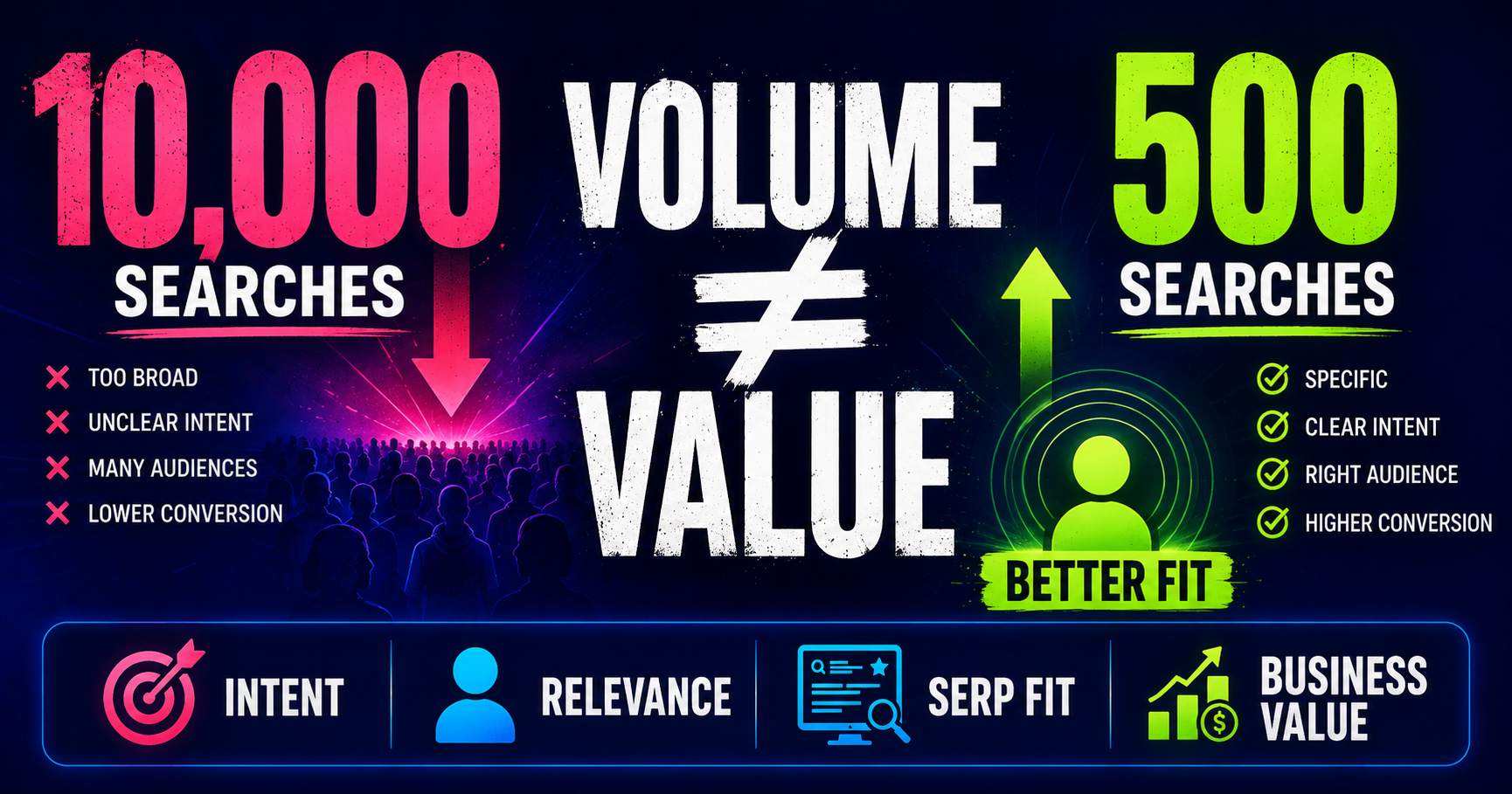
You compare two keywords.
The first has:
10,000 searches.
The second has:
500.
Which one should you target?
The obvious answer seems to be:
the one with 10,000 searches.
But keyword research is rarely that simple.
The larger keyword may be too broad.
Its intent may not match your page.
Its audience may have little connection to your business.
And the smaller keyword may describe exactly the person you want to reach.
Search volume matters.
But it is only one part of the story.
What is search volume?
Search volume is a metric intended to estimate how often a keyword or query is searched within a particular period, market and data source.
It is commonly used to understand:
- relative search demand;
- the popularity of different topics;
- seasonal interest;
- and which queries may deserve further research.
When it comes from a reliable source, search volume can be extremely useful.
The problem begins when the number becomes the entire keyword strategy.
Search volume is an estimate, not a traffic promise
Suppose a keyword tool reports:
5,000 monthly searches.
That does not mean:
“If I rank, I will receive 5,000 visitors.”
Search volume and website traffic are different things.
Search results may contain:
- multiple organic results;
- ads;
- featured snippets;
- videos;
- local results;
- shopping elements;
- People Also Ask;
- AI-generated answers;
- and other SERP features.
People may click several results.
They may click none.
They may change the query.
They may find the answer directly in the search experience.
A search-volume number describes estimated demand.
It does not describe exactly how that demand will become traffic for your page.
A bigger keyword is not automatically a better keyword
Imagine you sell project management software for small nonprofit organizations.
You could target:
“project management”
or:
“project management software for nonprofits.”
The broader phrase may attract far more searches.
But it could represent people looking for:
- a definition of project management;
- project management jobs;
- certifications;
- methodologies;
- university courses;
- software;
- templates;
- or general advice.
The narrower query tells you much more.
It reveals:
- the type of solution;
- the target audience;
- and part of the likely commercial intent.
Fewer searches can sometimes mean:
more relevance.
Relevance should come before volume
Before asking:
“How many searches does this keyword have?”
ask:
“Does this search actually matter to us?”
A keyword with enormous demand may be strategically useless if:
- the audience is wrong;
- the topic is unrelated to your expertise;
- the intent does not match your page;
- or there is no meaningful connection with your website.
SEO traffic is not valuable simply because it is traffic.
The right visitor matters more than the largest possible visitor count.
Search intent changes the meaning of volume
Two queries can have similar search volume and completely different value.
Consider:
“WordPress”
and:
“hire WordPress developer.”
The first is extremely broad in intent.
Someone could be looking for:
- WordPress itself;
- documentation;
- themes;
- plugins;
- hosting;
- tutorials;
- news;
- or the login page for their site.
The second query communicates a much clearer need.
For a development agency, even significantly lower demand could be more commercially relevant.
Volume without intent is incomplete information.
Specific queries often tell you more about the searcher
Compare:
“SEO”
with:
“how to fix pages excluded by noindex.”
The second query is far more specific.
It tells you:
- there is a concrete problem;
- the person probably manages a website;
- they want practical guidance;
- and the likely content format is instructional.
This makes the page easier to plan.
It may also make the visitor more valuable to a site focused on technical SEO.
Long-tail keywords can be small individually and important collectively
A website does not need to depend on one giant keyword.
A strong topic can attract searches through many specific queries.
An article about technical SEO audits might be discovered through searches around:
- technical SEO audit checklist;
- how to audit a website;
- technical SEO issues;
- crawlability audit;
- indexing problems;
- canonical audit;
- website SEO checks;
- and many other variations.
Looking only at the volume of one exact phrase can therefore hide the wider topic opportunity.
One page can satisfy more than one wording variation
Keyword research becomes inefficient when every phrase is treated as a completely separate target.
For example:
- how to do keyword research;
- how to perform keyword research;
- keyword research guide;
- keyword research for beginners.
These queries may represent very similar needs.
If the intent and SERP overlap strongly, one useful page may satisfy several of them naturally.
You do not necessarily need a page for every volume number in a spreadsheet.
Search volume can hide ambiguity
Broad keywords often have attractive numbers because they represent many possible needs.
Take:
“CRM.”
Someone searching that term may want:
- a definition;
- software;
- a comparison;
- a specific CRM brand;
- pricing;
- a course;
- implementation help;
- or a job involving CRM systems.
A large number can therefore hide a very fragmented audience.
More specific queries may represent less demand but much stronger intent.
Always look at the SERP behind the number
A keyword database gives you a metric.
The search results give you context.
Before prioritizing an important keyword, inspect the current SERP.
Look at:
- the dominant page types;
- the likely search intent;
- the brands that appear;
- the content formats;
- questions;
- related searches;
- featured search elements;
- and whether the results are consistent or mixed.
A large search-volume number can become much less attractive once you discover that the SERP does not fit the page you want to create.
A high-volume query may require the wrong format
Suppose you discover a popular query:
“website speed test.”
You plan to write an article.
But the SERP is dominated by tools where users can immediately enter a URL and test their site.
The problem is not necessarily competition.
The problem is format.
The searcher may want to:
perform a test.
Not read a long explanation about testing.
Search volume cannot tell you that by itself.
The SERP can.
Search volume does not measure content fit
A keyword may have enormous demand.
But can your website create the page that query actually deserves?
Maybe the strongest results contain:
- original datasets;
- interactive tools;
- large product databases;
- expert testing;
- community participation;
- or resources you cannot reasonably reproduce.
The keyword still has the same volume.
But your realistic content opportunity changes.
Search volume does not measure business value
Imagine two keywords:
Keyword A: 20,000 searches
Keyword B: 600 searches
Keyword A attracts a broad audience with almost no connection to your service.
Keyword B describes exactly the business problem your company solves.
Which one is more valuable?
The search-volume column cannot answer that question.
Business value depends on:
- who is searching;
- what they need;
- how closely that need matches what you offer;
- and what useful next step exists after the visit.
Informational searches can still have strategic value
Business relevance does not mean every keyword needs buying intent.
A useful informational query can help you:
- educate your audience;
- demonstrate expertise;
- build topical coverage;
- support other pages through internal links;
- answer questions before someone becomes a customer;
- and build trust over time.
The important question is whether the topic makes sense for the website.
Not whether every visitor is ready to buy immediately.
Very low volume does not automatically mean “ignore it”
Specific topics can look tiny in keyword databases.
That does not always make them unimportant.
A query may be valuable because it:
- describes a highly specific problem;
- matches an important audience;
- supports a key product or service;
- fills an important gap in your content;
- or attracts a small but highly relevant group of people.
For specialist websites, that can matter a lot.
Zero search volume does not always mean zero searches
Keyword databases cannot contain perfect measurements for every possible query.
Very new, very specific or rarely searched phrases may have limited or unavailable data.
A reported value of zero should therefore not automatically be interpreted as:
“No human has ever searched this.”
It may simply mean the available data source does not provide meaningful measurable demand for the phrase.
This is another reason to combine metrics with:
- audience knowledge;
- search-result evidence;
- related searches;
- questions;
- and real business problems.
New topics can appear before keyword databases fully reflect them
Search behavior changes.
New technologies appear.
New products launch.
New terminology spreads.
People begin asking questions that did not exist a year earlier.
Waiting for a large historical search-volume number can sometimes mean arriving late to an emerging topic.
This does not mean you should chase every trend.
It means volume should not be the only evidence that a topic deserves attention.
Seasonality can make one number misleading
Some searches are stable throughout the year.
Others change dramatically by season.
Topics may be affected by:
- holidays;
- travel seasons;
- school calendars;
- tax deadlines;
- annual events;
- product launches;
- weather;
- or recurring business cycles.
An average monthly number can hide those peaks and valleys.
When timing matters, look at trends rather than relying only on one aggregate figure.
Country and language can completely change the opportunity
Search volume needs geographic context.
A keyword can have significant demand globally but very little demand in the market you serve.
The reverse can also happen.
A niche phrase may be especially relevant in one country or language.
When researching content, make sure the data matches:
- your target country;
- your language;
- and your actual audience.
A large global number may not help a local business.
Different tools can report different search volumes
Search-volume data depends on the provider and methodology.
Different platforms may:
- use different data sources;
- group queries differently;
- update at different times;
- model missing data differently;
- or define geographic markets differently.
You may therefore see different numbers for the same keyword.
That does not automatically mean one tool is broken.
It means search volume should be understood as an estimate tied to a particular data source.
Use search volume comparatively
One of the most practical ways to use search volume is for comparison.
Suppose you are researching several closely related queries:
- technical SEO audit;
- SEO audit checklist;
- website SEO audit;
- technical SEO checklist;
- SEO website analysis.
Reliable volume data can help reveal which wording appears to have more demand.
That is useful.
But you still need to determine:
- whether the queries share the same intent;
- whether they belong on the same page;
- which one best describes the page;
- and which audience you actually want to serve.
Volume can help prioritize — but should not automatically decide
Imagine you have 100 relevant content ideas.
Search volume can help you organize them.
You may identify:
- large core topics;
- medium-demand supporting topics;
- specific long-tail questions;
- and low-volume specialist topics.
That makes planning easier.
But prioritization should also consider:
- relevance;
- intent;
- competition;
- content fit;
- business value;
- existing content;
- and strategic importance.
Search volume and keyword difficulty should not make the decision together either
SEO workflows often combine two numbers:
high volume + low difficulty = opportunity.
That can be a useful filter.
But even that combination does not tell you everything.
A keyword can have:
- high volume;
- low reported difficulty;
- and almost no relevance to your website.
Or the SERP may show a completely different intent from the page you intended to create.
Two metrics are still not a strategy.
A smaller query can lead to a stronger page
Broad topics create broad pages.
Specific problems often create more useful pages.
Compare:
“SEO tips”
with:
“how to fix duplicate title tags on WordPress.”
The first could become almost anything.
The second gives you a clear problem to solve.
That clarity helps with:
- the title;
- the H1;
- the outline;
- examples;
- screenshots;
- and the final answer.
The smaller keyword may produce the better piece of content.
Look at the total topic opportunity
Instead of asking only:
“How much volume does this exact keyword have?”
also ask:
“What larger topic does this query belong to?”
A strong page may naturally answer:
- the main query;
- related variations;
- follow-up questions;
- supporting subtopics;
- and narrower problems.
That makes topic-level thinking more useful than obsessing over one exact phrase.
Do not use volume to justify irrelevant content
One of the worst content strategies is:
“This keyword has lots of searches, so let's write about it.”
Imagine an SEO platform publishing articles about:
- celebrity news;
- football scores;
- phone wallpapers;
- and recipes.
Those topics can have enormous demand.
They still make no sense for the platform.
Search demand should support your strategy.
It should not replace it.
What should you evaluate alongside search volume?
For an important keyword, look at several dimensions together.
Relevance
Does this topic matter to the audience you want to reach?
Search intent
What is the person actually trying to accomplish?
SERP fit
Does the type of page you want to create belong in the current search results?
Specificity
Does the query clearly describe a problem, audience or need?
Competition
What does the search landscape actually look like?
Content fit
Can you create something useful enough to justify entering that SERP?
Business or strategic value
Does the topic support the purpose of your website?
Search demand
When reliable volume data is available, is there meaningful interest in the topic?
Together, these signals tell you much more than search volume alone.
A practical example
Imagine a company building SEO audit software for small-business owners.
It is choosing between three topics.
Keyword A: “SEO”
- very broad;
- potentially enormous demand;
- extremely mixed intent;
- weak page direction.
Keyword B: “SEO audit tool”
- more specific;
- clearer commercial intent;
- strong connection to the product;
- clearer SERP expectations.
Keyword C: “how to understand an SEO audit report”
- likely much narrower;
- strong informational intent;
- highly relevant to the audience;
- excellent educational opportunity.
If volume alone makes the decision:
Keyword A probably wins.
But strategically, both B and C may be much more useful.
One could support the product directly.
The other could solve an important problem for the exact audience the product serves.
What if you do not have search-volume data?
You can still research a topic.
You can examine:
- current organic results;
- search intent;
- related searches;
- questions;
- content formats;
- SERP features;
- topic relevance;
- and whether you can create something genuinely useful.
What you cannot honestly say is:
“This keyword gets 3,700 searches per month.”
unless you actually have a data source supporting that number.
Where Fridica fits
Fridica's Keyword & Topic Assistant currently focuses on real search-result evidence and AI-assisted interpretation.
Its search evidence can include:
- organic results;
- related searches;
- questions when present;
- featured search elements when present;
- and AI Overview when available in the returned evidence.
Fridica can then help interpret:
- likely search intent;
- SERP patterns;
- dominant formats;
- topic opportunities;
- content gaps;
- questions worth answering;
- and a possible primary content angle.
What Fridica does not currently do is invent a search-volume estimate because a number would make the report look more complete.
Why Fridica does not estimate search volume with AI
An AI model can produce a plausible-looking number.
That does not turn the number into measured search data.
There is an important difference between:
“This query appears in related searches.”
and:
“This query receives 2,400 searches per month.”
The first can come from observed search evidence.
The second requires a valid quantitative data source.
Fridica keeps that boundary clear.
If search volume is not available:
it stays unavailable.
Search evidence can still reveal demand signals
Not having an exact volume number does not mean you know nothing about the topic.
Current search results can still reveal:
- how the topic is being interpreted;
- which page types appear;
- which related searches surround it;
- which questions appear;
- which formats are common;
- and where content opportunities may exist.
These signals cannot be converted honestly into an exact search-volume figure.
But they can still support good editorial decisions.
A practical search-volume checklist
When a keyword tool gives you a search-volume number, ask:
- What data source produced the number?
- Which country and language does it represent?
- Is the keyword genuinely relevant to my audience?
- What is the likely search intent?
- Is the query broad or specific?
- What does the current SERP look like?
- Does my intended page match the dominant format?
- Could several related queries be served by the same page?
- Does the topic have strategic or business value?
- Am I treating volume as evidence or as the entire decision?
The short version
Search volume is useful.
It helps you understand estimated demand and compare topics.
But a larger number does not automatically mean:
- a better keyword;
- more useful traffic;
- a better content opportunity;
- easier rankings;
- or more business value.
Look at the number.
Then look beyond it.
Understand the intent.
Inspect the SERP.
Evaluate relevance.
Consider specificity.
Think about the wider topic.
And decide whether the right people searching that query actually matter to your website.
The biggest keyword is not always the biggest opportunity. Sometimes the smaller search tells you much more about the person you actually want to reach.
In the next article in this series, we will look at keyword research for existing pages — how to use current search evidence to decide what an already-published page should improve instead of automatically creating something new.
Keep learning
Related SEO guides
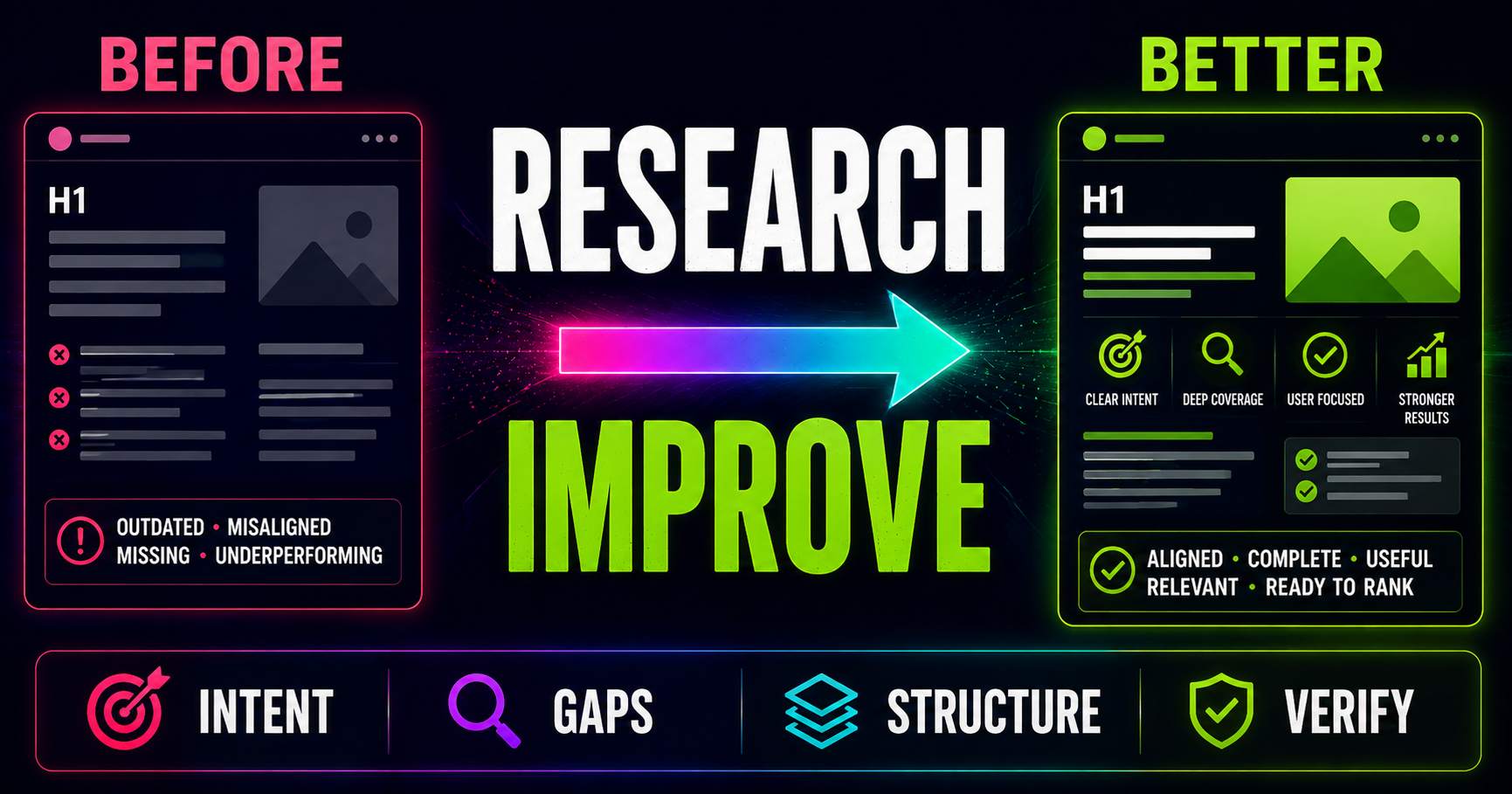
Keyword Research for Existing Pages: What Should You Improve?
Keyword research is not only for new content. Learn how to compare an existing page with current search intent, SERP patterns, related questions and content gaps to decide what actually needs improving.
Read guide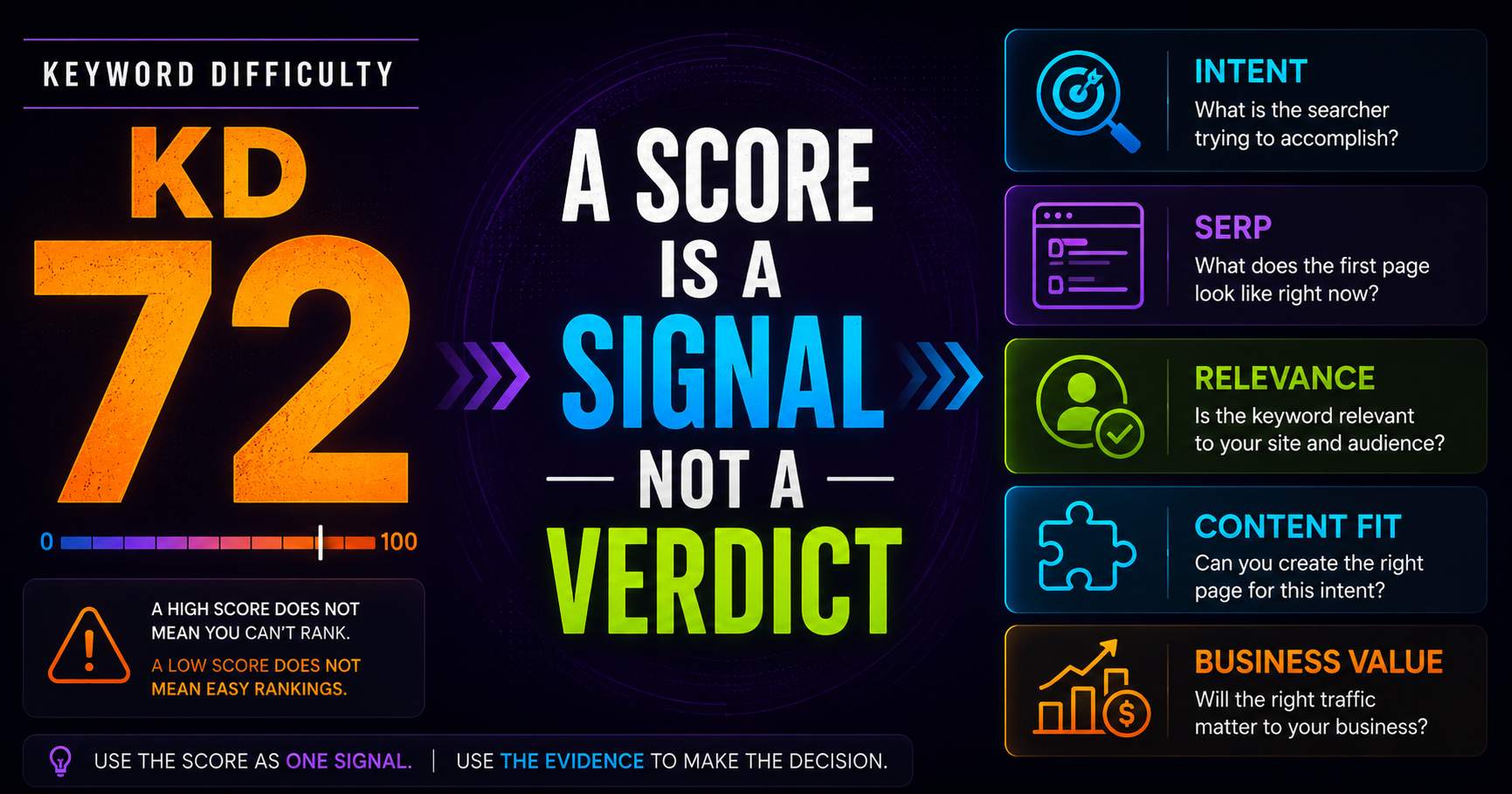
Keyword Difficulty: What the Number Does - and Doesn’t - Tell You
Keyword difficulty can be a useful comparison metric, but it is not a prediction of whether your page can rank. Learn what the score represents, what it leaves out, and how to use it alongside real SERP evidence.
Read guide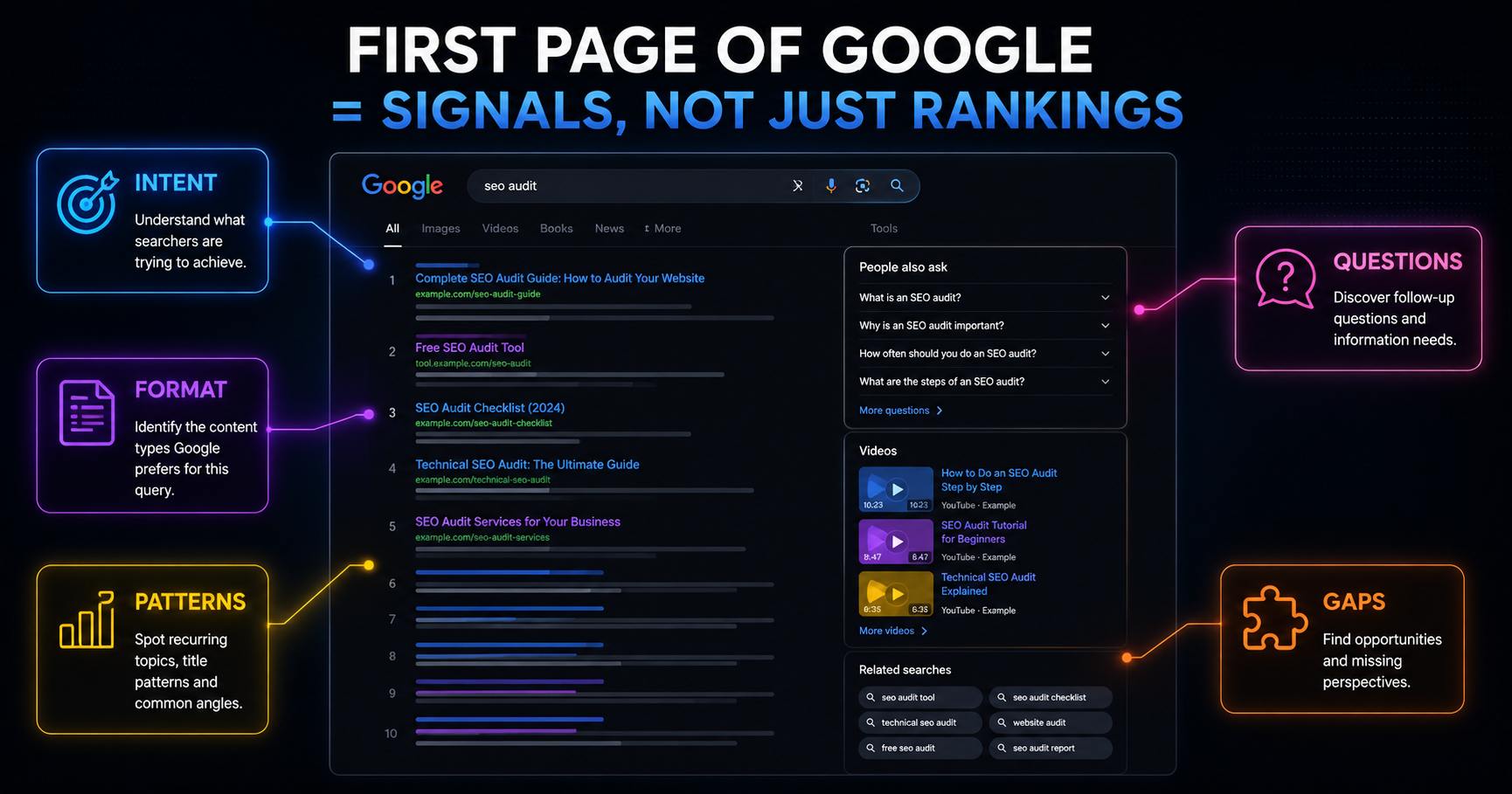
What Can You Learn From the First Page of Google?
The first page of Google can reveal much more than who currently ranks. It can help you understand search intent, dominant content formats, recurring topics, SERP features and where useful content opportunities may exist.
Read guidePut this into practice
See what applies to your page.
Start with a one-page review, then run a full site audit when you are ready.